
Energy Saving with Intelligent Compressed Air Stations: Fusheng's Contribution to Dual Carbon Goals
What are the "dual carbon" goals? These refer to the targets of "carbon peaking" and "carbon neutrality," aiming for carbon emissions to peak by 2030 and achieve carbon neutrality by 2060. Sustainable development of the ecological environment holds profound significance and concerns the future of humanity. To better achieve these goals, there is a shift from dual control over energy consumption to dual control over total carbon emissions and their intensity, with ongoing updates and optimizations in the details.
Changes from within lead to new horizons and perspectives that will guide people on a more exciting journey. Establishing a "green production and lifestyle" system is not limited to production but involves all aspects of life, promoting harmonious coexistence between humans and nature. As a result, various industries emphasize green, efficient, and environmentally friendly concepts and actively explore work related to the dual carbon goals for sustainable development.
Judging by the data on national industrial electricity consumption, from January to September, the secondary industry's electricity consumption was 4,236.4 billion kWh, an increase of 1.6% year-on-year; in September, the secondary industry's electricity consumption was 467.6 billion kWh, up by 3.3% year-on-year (according to data from the National Energy Administration). More energy-efficient equipment can directly help enterprises save energy and indirectly support the country's overall energy strategy.
Looking back at the past few months, due to production recovery and prolonged high temperatures, electricity consumption in many regions reached historical highs. To prevent last year's power shortage crisis from recurring, several provinces raised electricity prices for high-energy-consuming enterprises; Zhejiang increased tariffs for 634 such enterprises by up to 35%.
Since June, seven provincial grids—Hebei, Shandong, Henan, Shaanxi, Gansu, Ningxia, Xinjiang—and the Northwest Power Grid have all seen record-high power loads. The maximum power load of the Jiangsu grid also exceeded one billion kWh 19 days earlier than last year.
As electricity consumption continues to rise, energy saving and carbon reduction have become urgent goals for many industries.
Electricity is needed not only for residential use but also across various industrial applications.
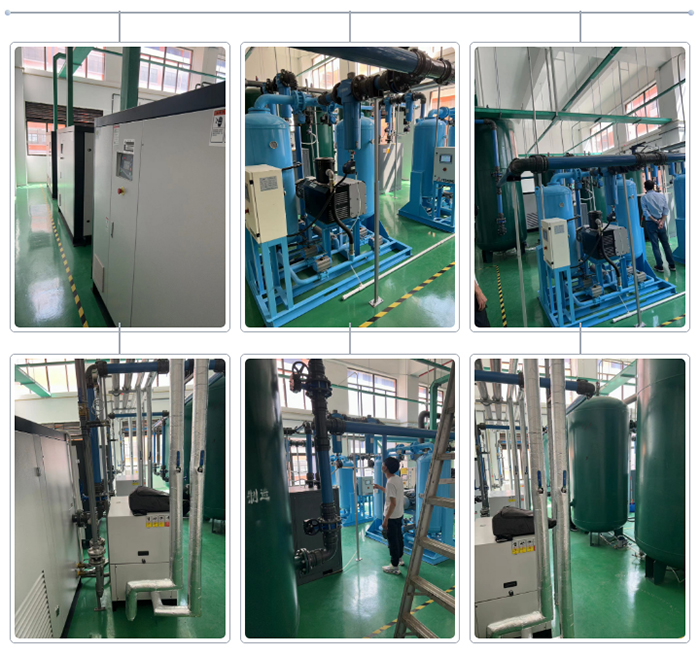
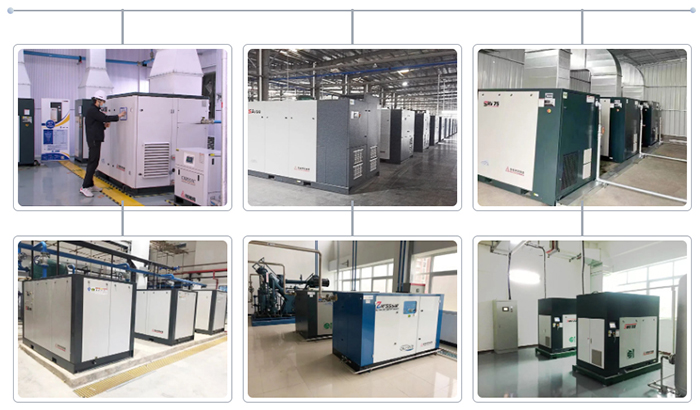
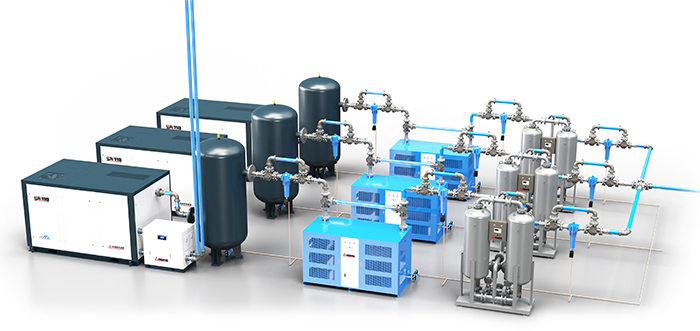
A compressed air station typically includes an air compressor, air tank, dryer, and filters. The energy consumption of the entire station depends not only on the efficiency of individual equipment but also on the planning of auxiliary components, pipelines, and energy recovery utilization. Excellent equipment performance naturally adds value to energy savings. Combined with scientific planning and professional design—precisely planning ventilation, water supply and drainage, pipeline losses, and energy recovery—each Fusen-designed and delivered energy-saving intelligent compressed air station becomes a powerful force for green and low-carbon industrial development. Energy management requires not only upgrades at the physical level in equipment and operations but also keeping pace with times in mechanisms and systems. Fusen has introduced the ISO50001 energy management system and invited international professional training institutions to train Fusen staff in batches on the energy management system. A professional energy management team has been established to assist users in planning and providing systematic solutions to achieve energy savings throughout the entire lifecycle. We aim to provide professional rationalization suggestions for energy management not only within the scope of compressed air systems but also throughout the entire production process for our clients.